As the Spring semester gets closer, we wanted to provide some context on enrollment. The information below is relevant to both new and returning students. Please review carefully and reach out with any questions you may have. If you have not done so already, please be sure to enroll in classes prior to the start of the semester, which begins January 19.
Continuous enrollment is a requirement of all graduate programs. Students who will not be registering in coursework or research credits must register for a zero credit continuous registration course to maintain their active student status. Continuous registration courses include GRAD 5997, GRAD 5998, and GRAD 6998, as well as GRAD 5999 (Thesis Preparation) and GRAD 6999 (Dissertation Preparation). Full descriptions of the continuous registration courses can be found here. Enrollment in these sections should be determined before the first day of classes. There are financial implications when changing from being enrolled in credits to no credits as of the first day of classes. Changes from credits to a zero-credit placeholder cannot be made after the first day of classes.
Students who wish to cancel enrollment prior to the start of the semester or who attend class and then decide to withdraw from all their courses should notify The Graduate School (TGS) by completing an online Voluntary Separation Notification Form as soon as possible. The add/drop period that extends through the 10th day of classes (February 1, 2021) is only available to students who plan to be enrolled in credited coursework throughout the semester. A student who wishes to go down to zero credits or withdraw from their program completely will need assistance from The Graduate School and will be subject to the university refund schedule which will apply based on the date the student notifies TGS of the intent to withdraw via the online Voluntary Separation Notification process, not when they last attended classes. More information on voluntary separation can be found here.
Students who do not register for classes by the 10th day are automatically discontinued from their program. If the student then wishes to be enrolled after Day 10, the student will need to request reinstatement to their program, which is not guaranteed and incurs a $65 fee. Students should also be aware that classes with insufficient enrollment will be cancelled and will then be unavailable even if the student is reinstated.
Fee bills for graduate students are due January 15, 2021. Information about the UConn Payment Plan can be found here and information on Graduate Assistant Payroll Deductions can be found here.
The decision to enroll in research credits in a given semester should be made in conjunction with the student’s advisor. Doctoral students should register for GRAD 6950. Plan A Master’s students should register for GRAD 5950. All sections will show “Staff” (or similar) as the instructor. Through an automatic process later in the semester, students will be moved to a grade roster associated with their major advisor. Permission numbers are not needed for students to register for these research courses. If you attempt to register and receive an error, contact registrar@uconn.edu for assistance. Be sure to include your 7-digit student ID in all correspondence.
Additional Registration Information for Graduate Assistants:
Graduate Assistants (GAs) are required to be enrolled as full-time students (6 or more credits), as noted in their offer letter and The Graduate Catalog. Employment as a GA is a result of student status, therefore GAs are expected to be registered for a minimum of 6 credits before the start date of their spring semester employment (January 7, 2021). GAs who have not completed their registration for a minimum of six credits by their start date are not fulfilling one of the contingencies of employment and may be subject to termination from their assistantship. (GAs employed solely at UConn Health should follow the registration deadlines set by UCH.)
Please note, the tuition waiver will not post to a GA’s fee bill until the GA is registered for at least 6 credits. Therefore, if a student is not fully registered in a timely fashion, this can result in a Bursar hold on the student’s account that blocks enrollment and other services, as well as incur late fees.
The decision to enroll in research credits in a given semester should be made in conjunction with the student’s advisor. Doctoral students should register for GRAD 6950. Plan A Master’s students should register for GRAD 5950. GAs should NOT register for GRAD 6960 (Full-Time Doctoral Research) or GRAD 5960 (Full-Time Master’s Research). GRAD 6960 and 5960 are only 3 credits and will prevent the tuition waiver from populating if it is the only course the GA is registered for, as well as create duplicate fee charges.
Additional Registration Information for Provost’s Professional Interns:
Students who are employed as Provost’s Professional Interns are required to be enrolled in six or more credits, as noted in their offer letter. Employment as a Provost’s Professional Intern is a result of student status, therefore Provost’s Professional Interns are expected to be registered for a minimum of 6 credits before the start date of their spring semester employment (January 7, 2021). Provost’s Professional Interns receive a tuition scholarship for the duration of their appointment. Registration prior to the deadline allows The Graduate School to accurately process this tuition scholarship in a timely manner, avoiding late fees and holds on the student’s account that block enrollment and other services.
While Provost’s Professional Interns are eligible for a tuition scholarship upon meeting the six credit registration threshold, in order to be reported as a full-time student, Provost’s Professional Interns must be registered for nine credits. This may be an important consideration for international students or those with student loans in deferment.
If you are experiencing difficulty registering, or have any questions, please feel free to reach out to The Graduate School for assistance. Please include your 7-digit student ID number in all correspondence.
To register now, please click here.
 Shreya Kulkarni, PhD candidate of Pharmaceutical Sciences in the School of Pharmacy, has been awarded the Young Investigator Award by Baxter for her research on ‘Reconstitution of high concentration lyophilized protein formulations.’ Shreya was presented with the award at Baxter’s international headquarters in Deerfield, Illinois. Shreya and her advisor, Professor Robin Bogner, presented the research to members of Baxter’s organization and winners of other awards. Reflecting on the award, Shreya stated that “it is a great honor to receive this highly competitive award. None of this would have been possible without the continued support and guidance from my advisor Professor Robin Bogner. Dr. Bogner has been instrumental in motivating me to delve deeper into every research problem. I would also like to thank my thesis committee and our collaborators for the helpful discussions and suggestions on my thesis research. I feel very lucky to be part of the Pharmaceutics program at UConn!”
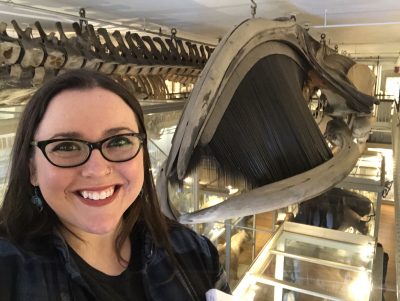 Sarah McAnulty of the University of Connecticut’s Department of Molecular and Cell Biology has received a American Association of University Women American Dissertation Fellowship. With this award, Sarah will conduct her thesis work on the Hawaiian bobtail squid and its symbiosis with a bioluminescent bacterium, Vibrio fischeri. Sarah’s work is uncovering how animal immune cells distinguish between their beneficial bacteria and others they encounter. For more information about AAUW Fellowships, please visit:
 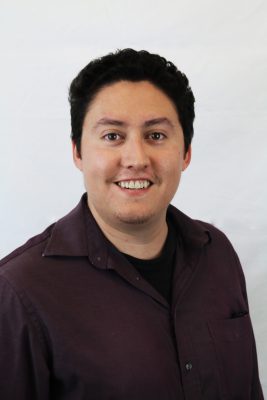 Marc Reyes of the University of Connecticut’s Department of History has received a Fulbright U.S. Student Program Award to India from the U.S. Department of State and the J. William Fulbright Foreign Scholarship Board. Reyes will conduct research in Delhi, Mumbai, and Ahmedabad. He will be affiliated with Jawaharlal Nehru University’s School of International Studies. His project, “In the Circle of Great Powers: India, the United States, and the Postcolonial Atomic State, 1947-1974” examines the political and cultural contexts of India’s atomic energy program and U.S. involvement in the development of their nuclear weapons program.